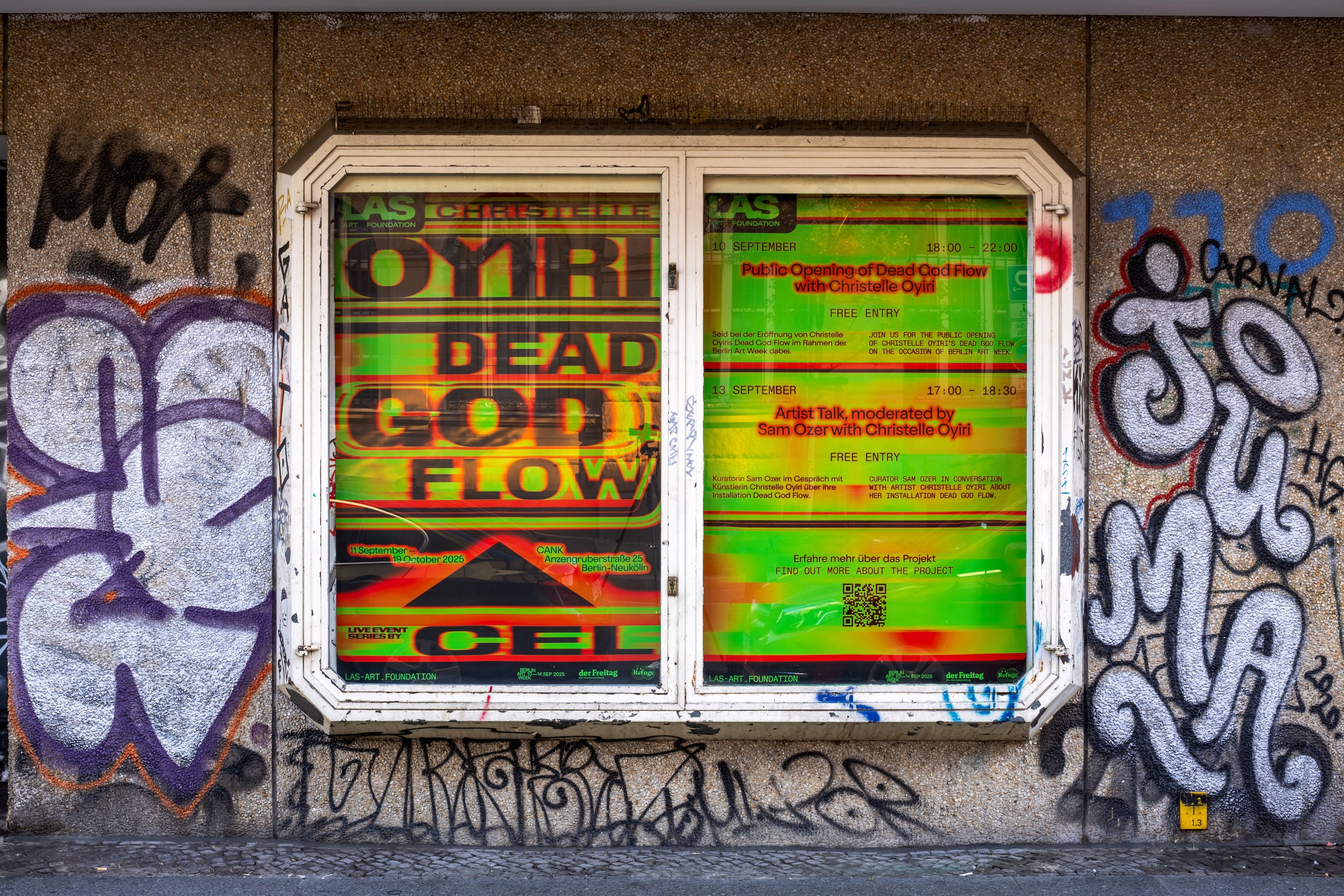
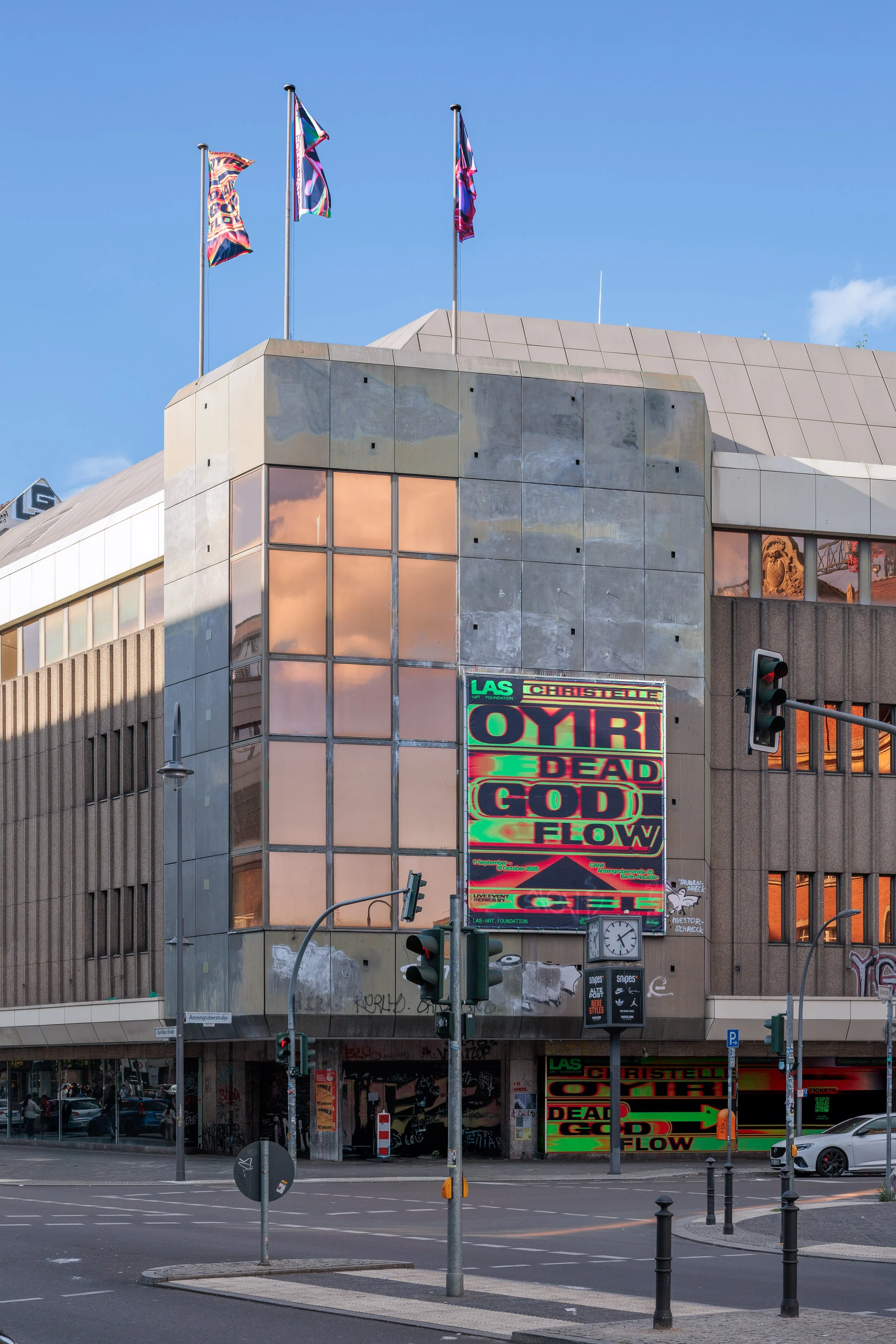
Christelle Oyiri – Dead God Flow
Las Foundation at Cank, Berlin
Exhibition documentation, 2025
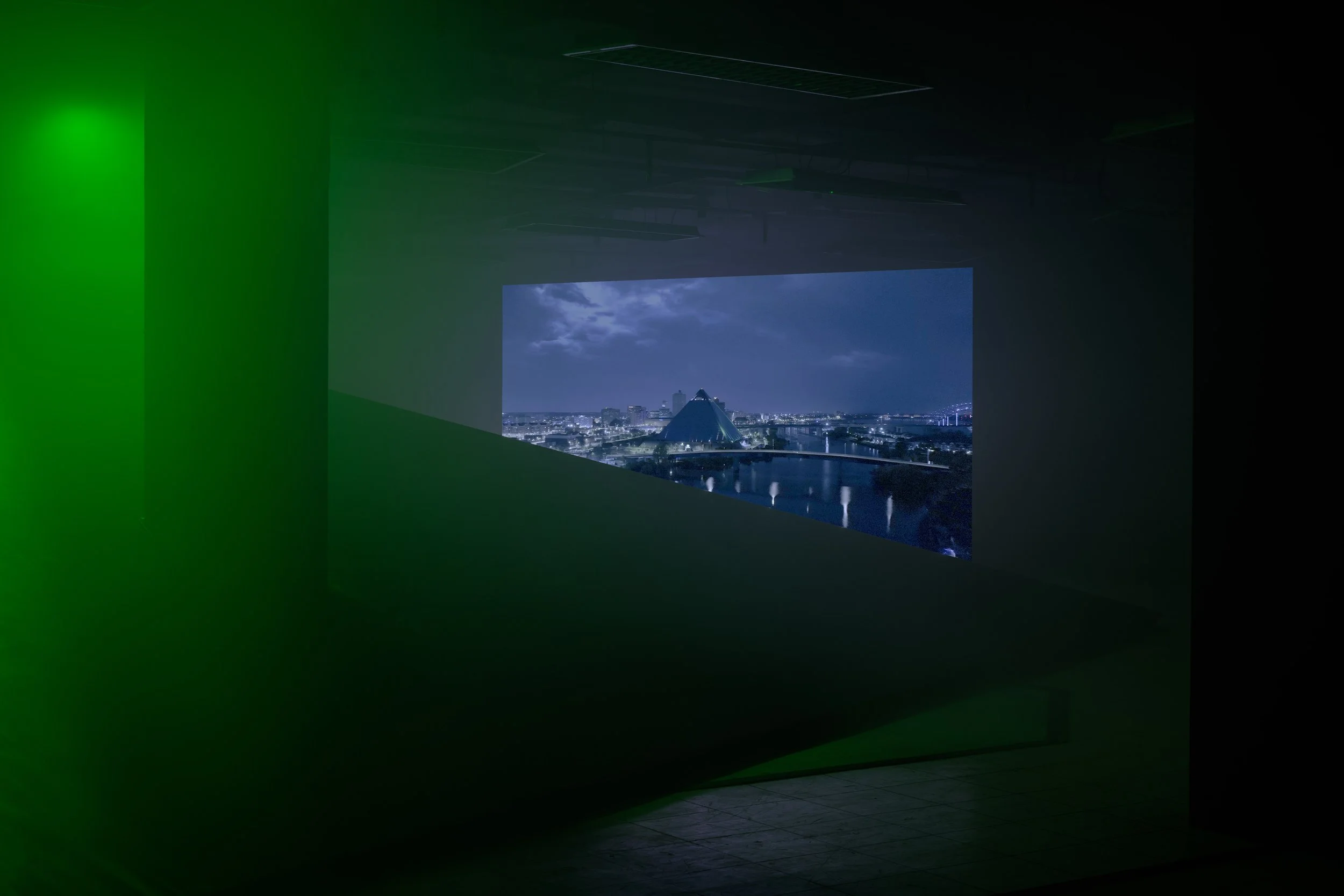
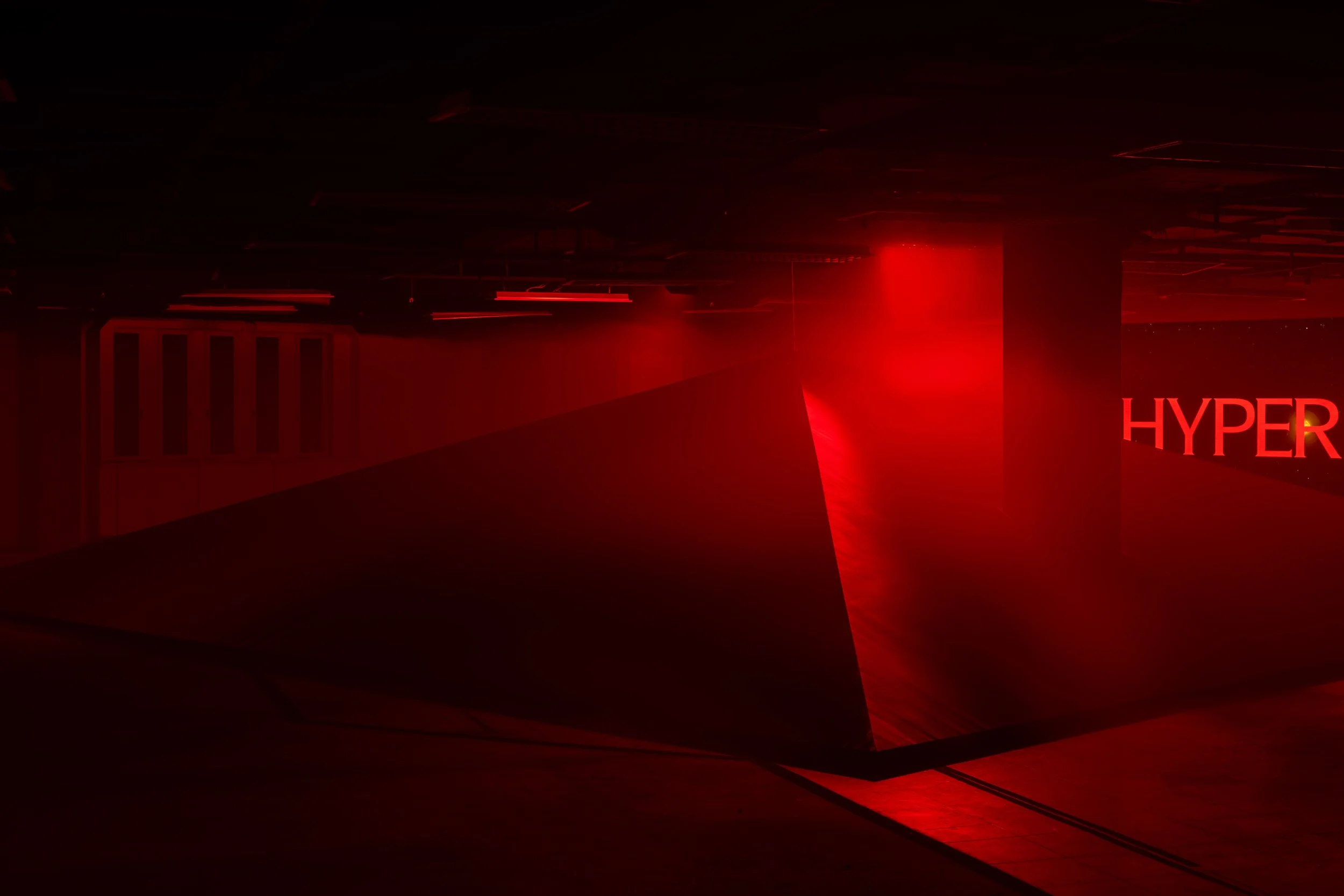
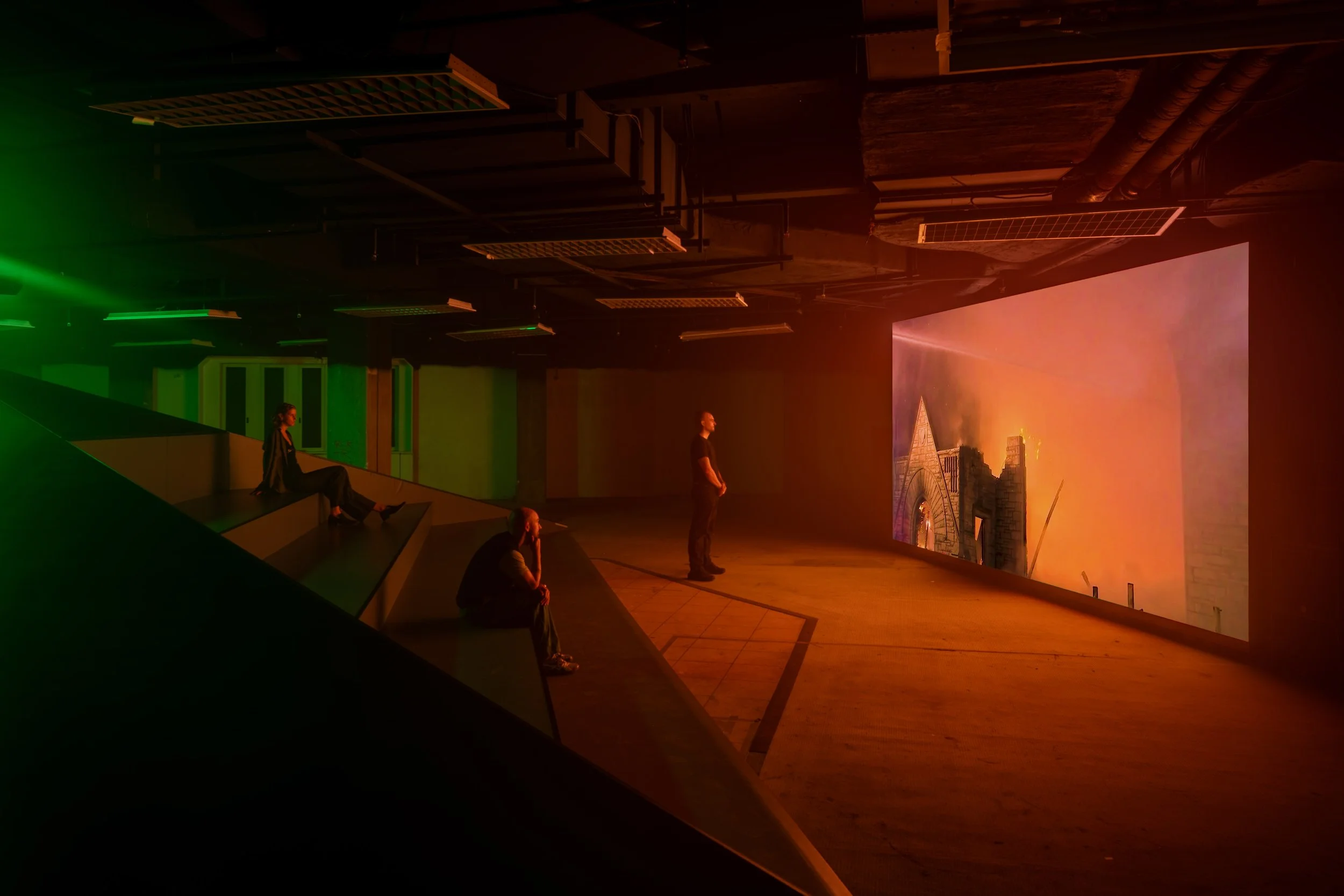
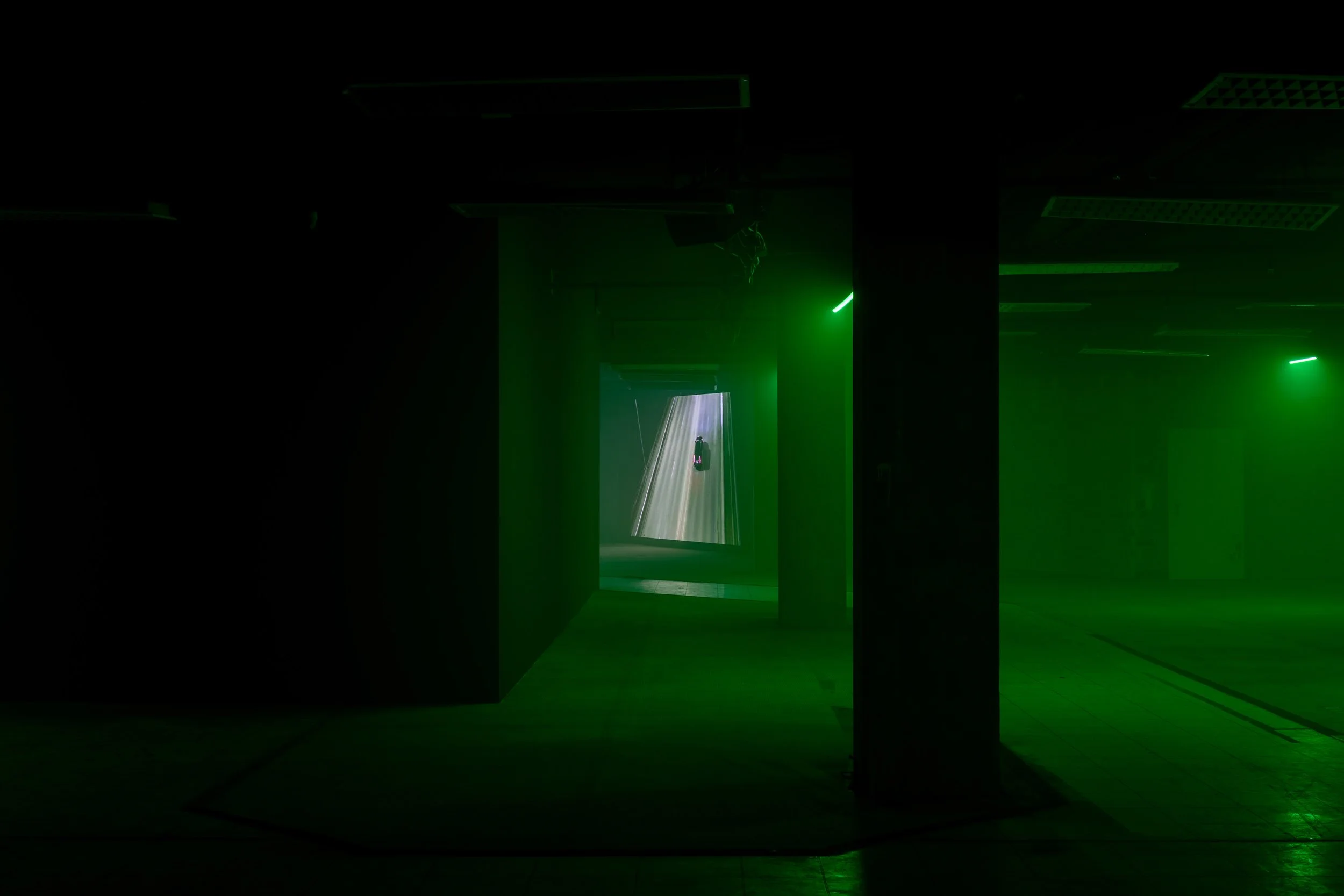
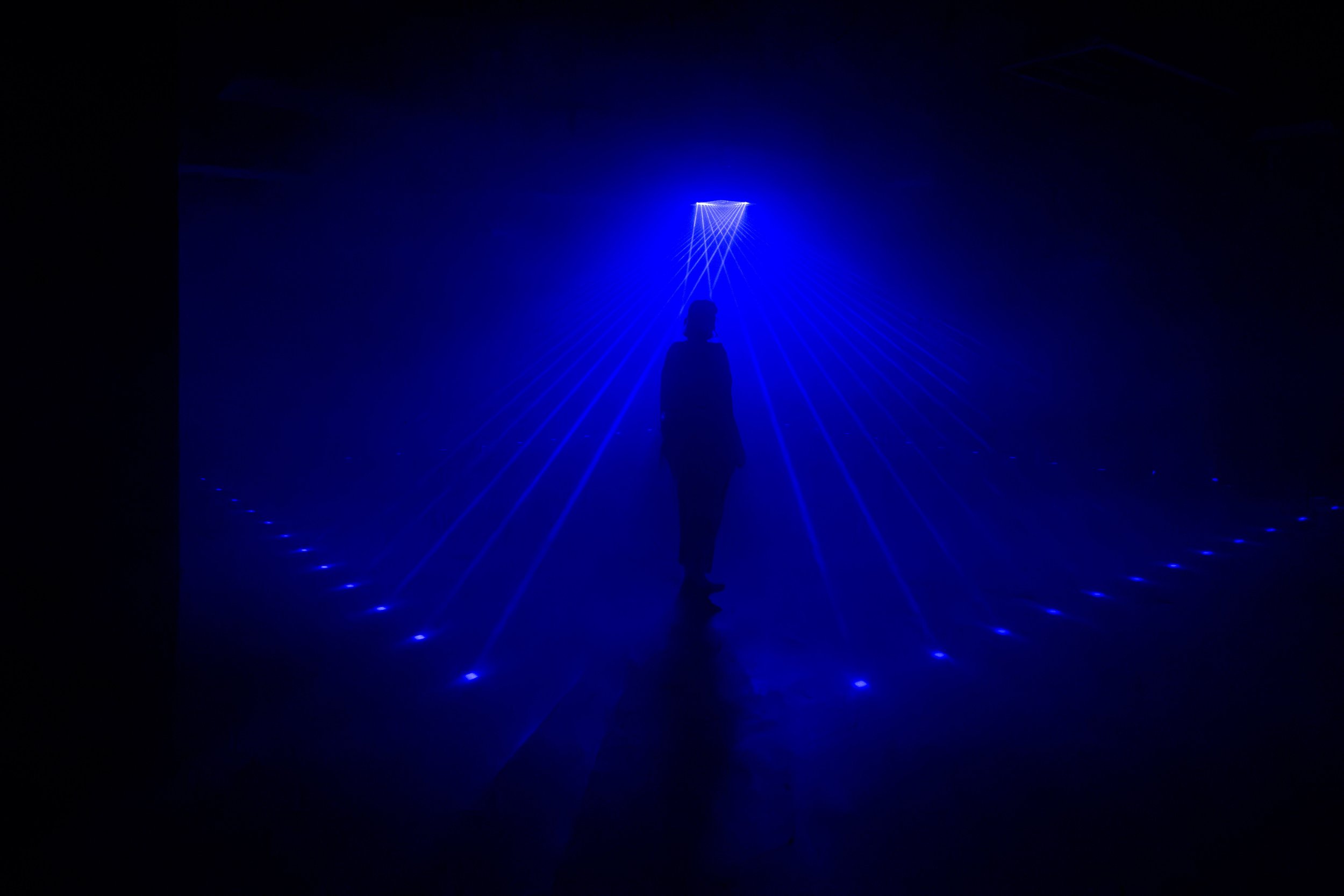
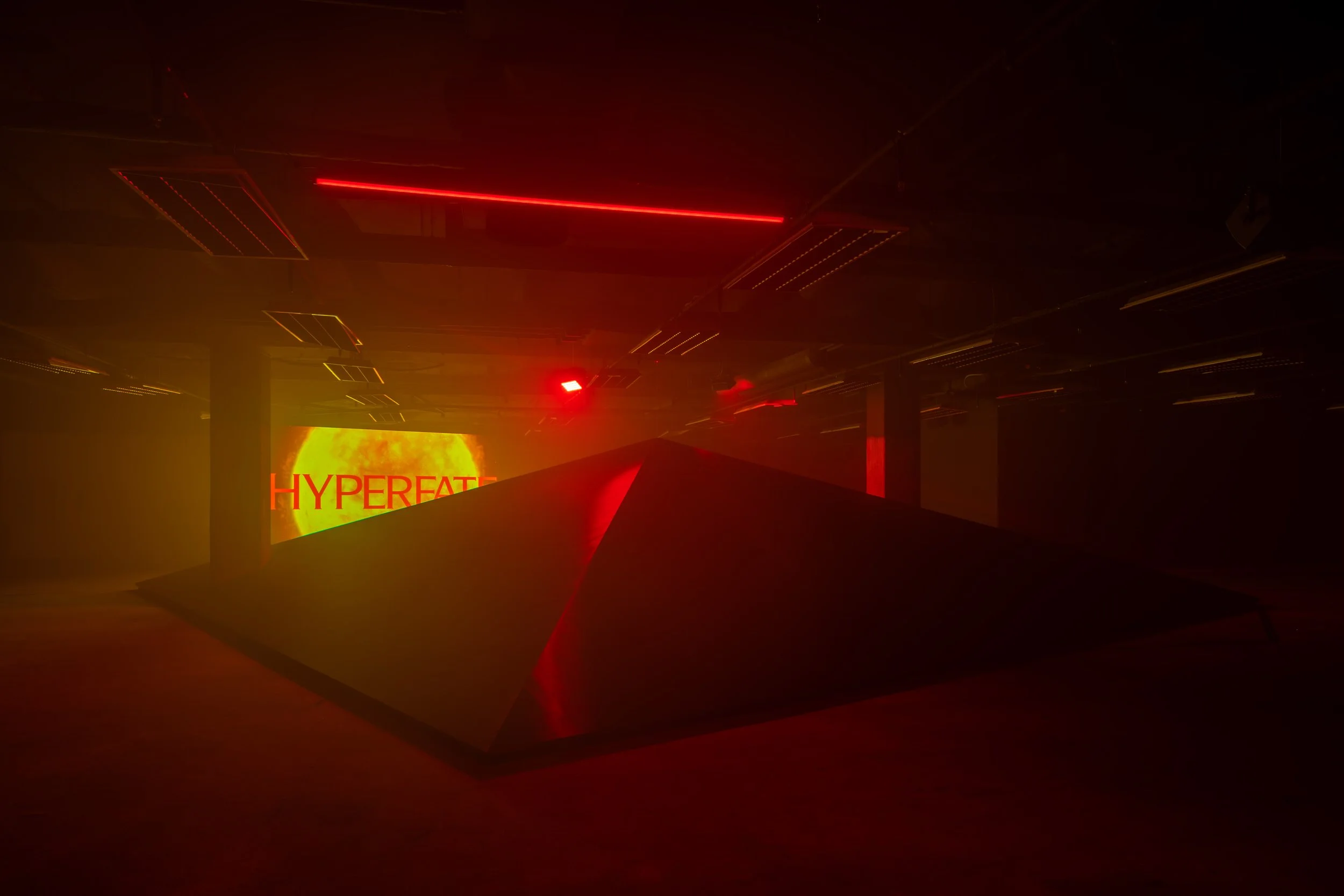
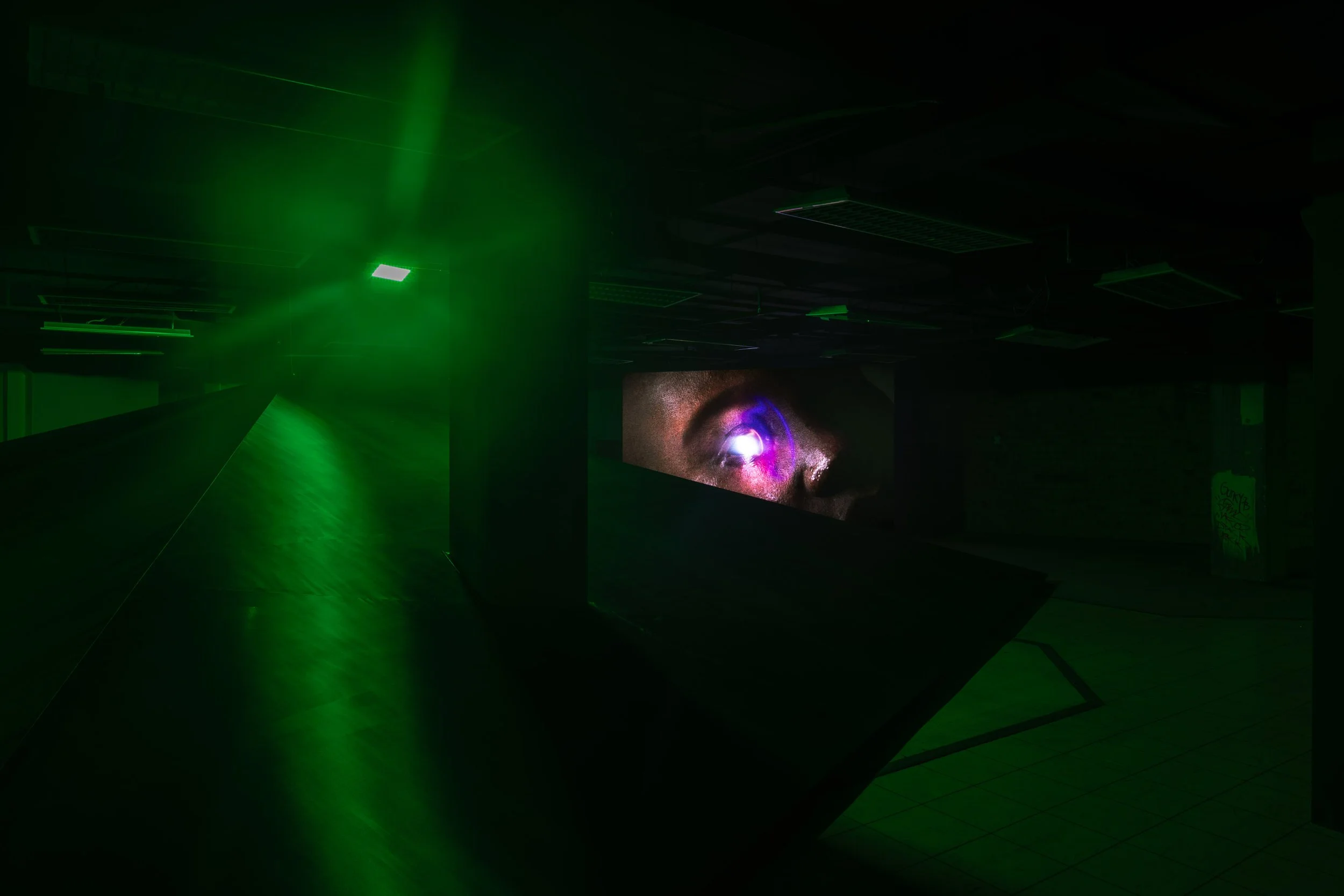
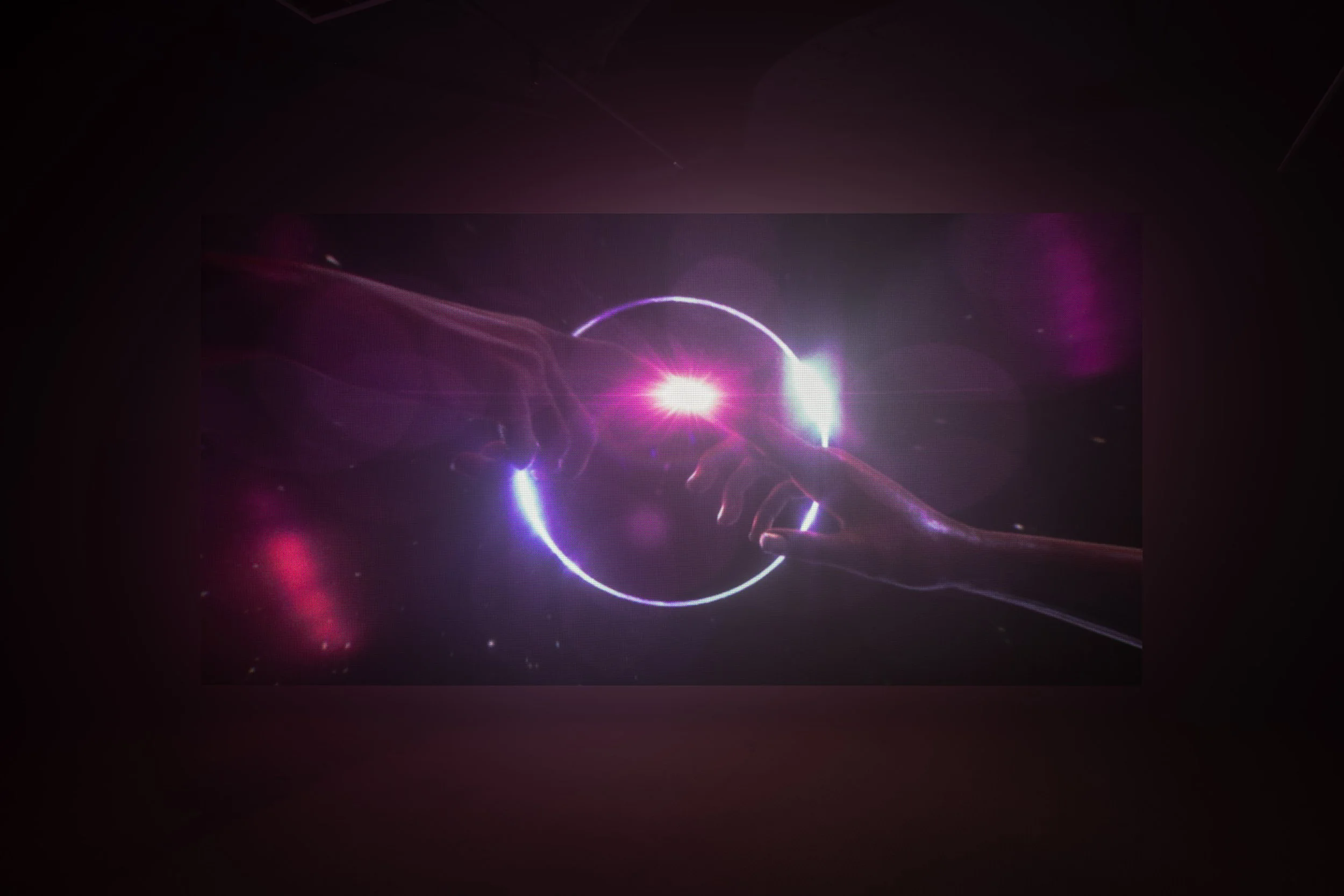
This series documented Christelle Oyiri’s audio-visual installation Dead God Flow at CANK in Neukölln, commissioned by LAS Art Foundation on the occasion of Berlin Art Week. The photographs focused on the way video, sound and light turned the space into an immersive environment around Hauntology of an OG and Hyperfate, tracing how Memphis street scenes, monuments, and rap culture were staged as a looping reflection on martyrdom, memory and the mythologisation of deceased musicians.
—
Exhibition text by Las Foundation
On the occasion of Berlin Art Week, LAS Art Foundation presented a newly commissioned audio-visual installation, Christelle Oyiri Dead God Flow, at CANK in Neukölln, Berlin. Dead God Flow was the first installation in Berlin by artist, DJ, and producer Christelle Oyiri. It was an audiovisual environment that brought together video, sound and spatial design.
At the core of the installation was the video Hauntology of an OG, which Christelle Oyiri developed with photographer Neva Wireko during a research journey through Memphis, Tennessee – a city whose name refers to ancient Egypt. Narrated by rapper and poet Darius Phatmak Clayton, the piece braided together histories of conflict and monuments. It referred to the Memphis Pyramid on the banks of the Mississippi, standing like a mirror to Giza, Egypt, and “echoing a lineage of grandeur and grief” – as the artist described. In Memphis, Tennessee, we also encountered the church where Martin Luther King made one of his final public speeches and traced how, with his assassination, dreams of an alternative future were lost. In this landscape, the city’s rap emerged as an architecture of sound.
Screened alongside Hauntology of an OG was Hyperfate (2022), an earlier video by Oyiri which explored the mythologisation of deceased rappers and their canonisation by fans as modern day saints.
Placed in a site-specific audiovisual environment at CANK, these works were each imbued with personal narrative. Examining martyrdom and memory, excellence and prophecy, they reminded us, in Oyiri’s words, that “death is not an ending but a loop, a broken god’s beat still pulsing.”